

Getting Started
To begin, download the Heart Coloring Pages and gather a few basic supplies.
Recommended Paper & Supplies
● Markers (washable or regular)
● Watercolor brushes
● Water
● 90# drawing paper, trimmed to 8.5 x 11
I strongly recommend using 90# drawing paper instead of copy paper or cardstock. It’s less absorbent, which allows the marker ink to soften and spread when water is applied—creating a painted effect rather than soaking in immediately.
If you find that the color isn’t moving into the center of the shapes, try adding a small amount of watercolor to the center instead of using plain water.
Monochromatic Hearts

For monochromatic hearts, outline each heart using tints and shades of a single color (for example, red).
● Use lighter and darker versions of the same color
● Paint over each heart with plain water using a watercolor brush
● Watch how the colors blend together naturally
This variation is perfect for reinforcing value and monochromatic color schemes.
Rainbow Hearts
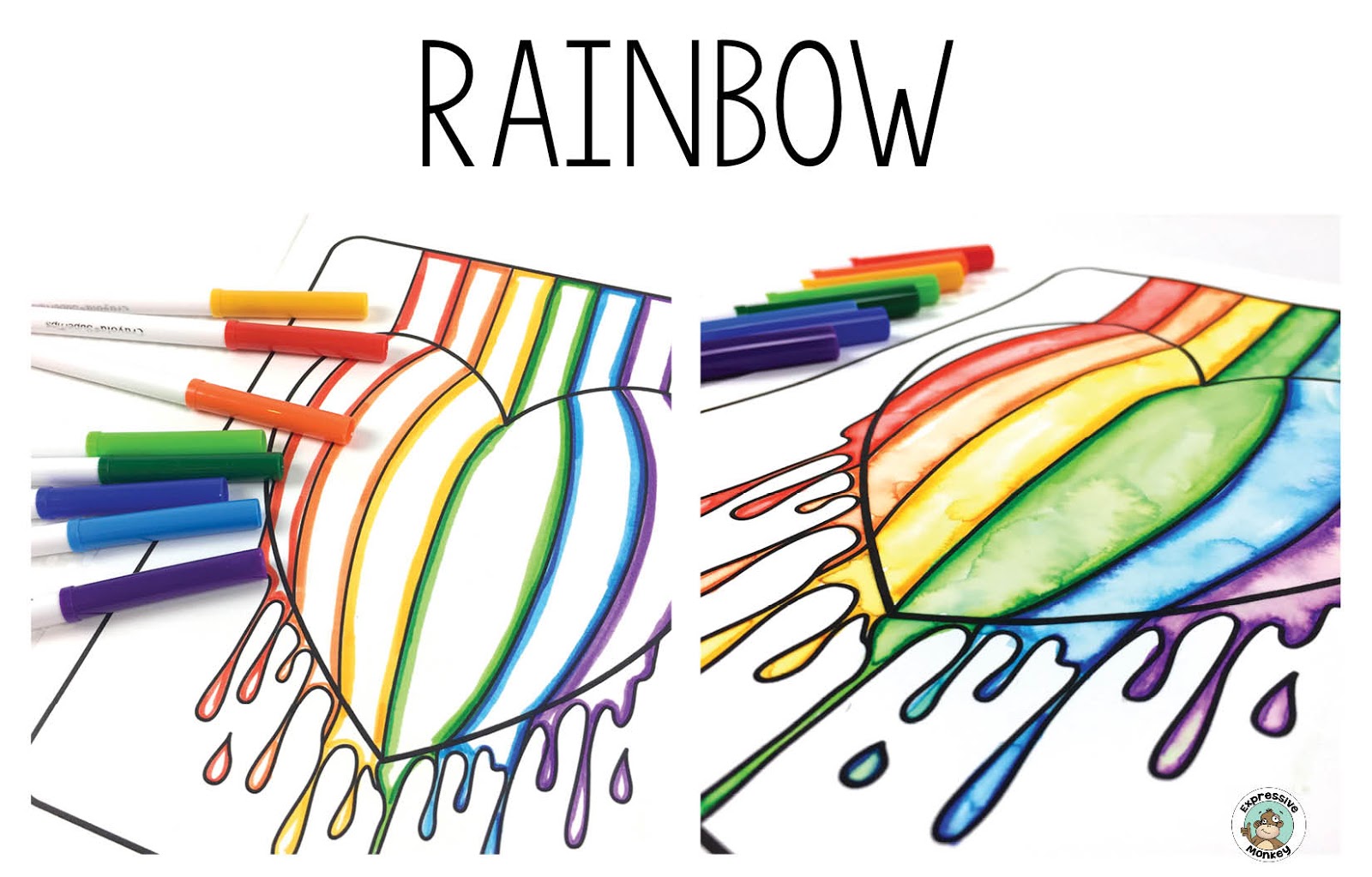
For the rainbow hearts, outline the heart lines using the colors of the rainbow in order.
● Red → Orange → Yellow → Green → Blue → Purple
● Paint over each section with plain water
● Focus on correct color order and smooth transitions
This is a great way to combine color theory practice with a visually striking result.
Primary Colors → Rainbow

How to use Primary Colors to Make a Rainbow
This page uses only primary colors to create a full rainbow.

Step 1: First Layer
● Outline each stripe using one primary color only
● Think ahead about the final color you’re trying to create
● Use a color key or reference chart if needed
● Allow this layer to dry completely
Step 2: Second Layer
Add the second primary color:
● Red over yellow → orange
● Blue over yellow → green
● Blue over red → purple
The second pass reveals the finished secondary colors clearly and cleanly.
Heart Coloring Page with Primary Colors

To create a plaid heart design, students work in both vertical and horizontal layers.
Vertical Stripes
● Outline each individual box, not just the stripe edges
● Create vertical stripes in red, yellow, and blue
● Allow to dry fully
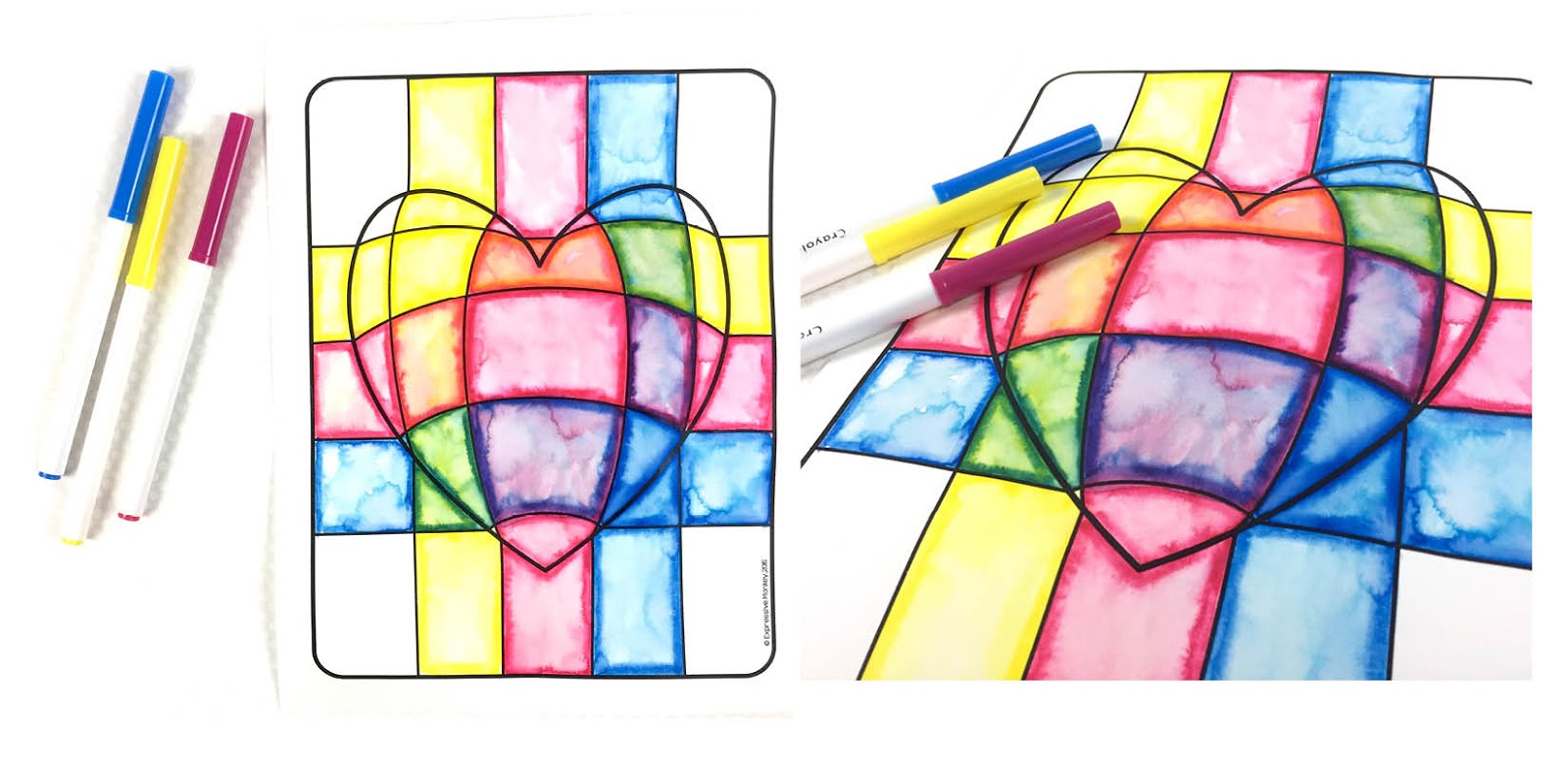
Horizontal Stripes
● Repeat the process horizontally
● Overlapping colors naturally form secondary colors
The finished design includes all primary and secondary colors, making this an excellent full-spectrum color lesson.
Cool Color Hearts
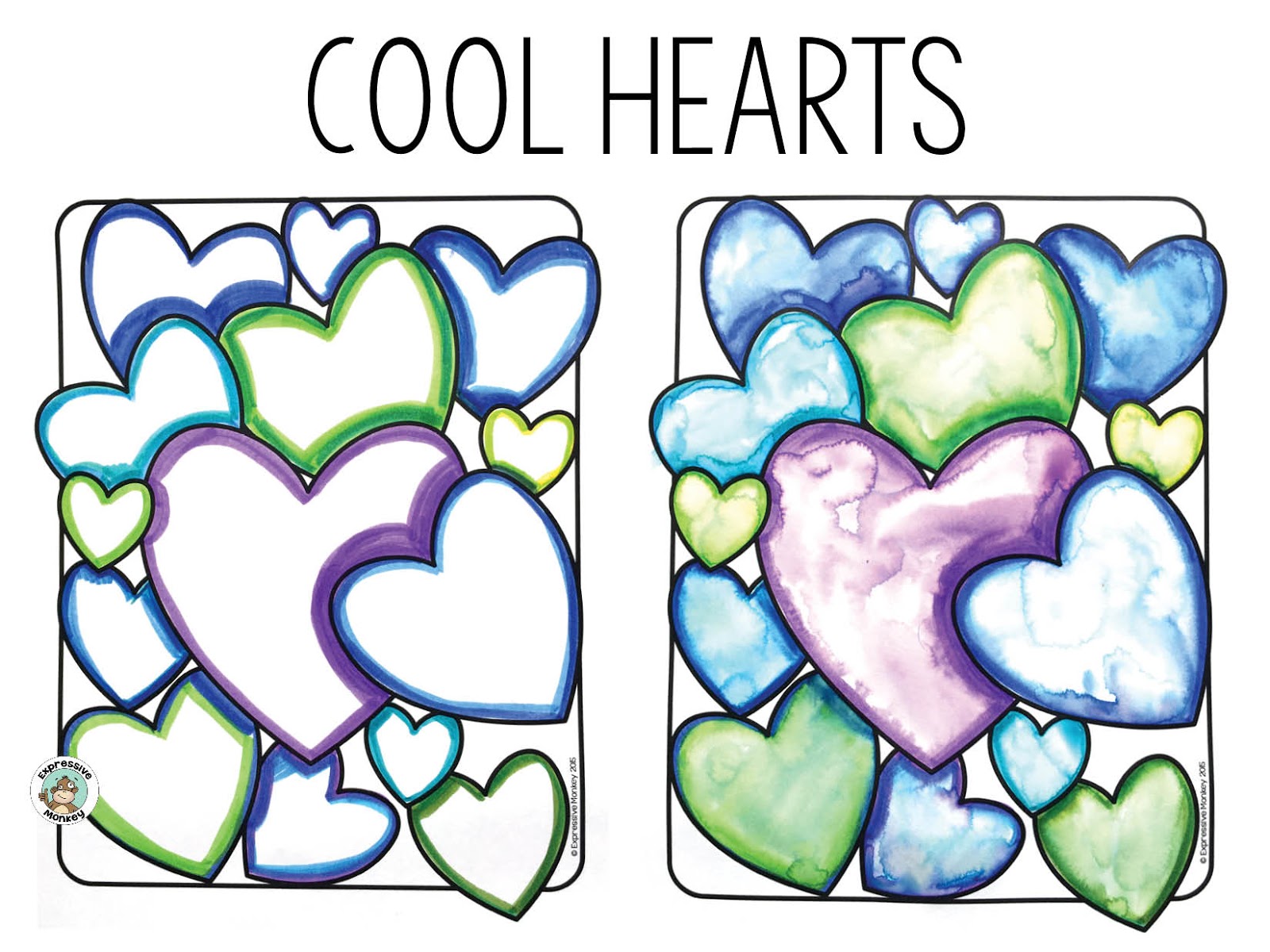
For cool color hearts, outline the shapes using blue, green, and purple.
● Add extra color where hearts overlap to suggest shadow
● Paint over each heart with plain water
● Observe how cool colors naturally recede and create depth
Optional: Adding Shading with Dots
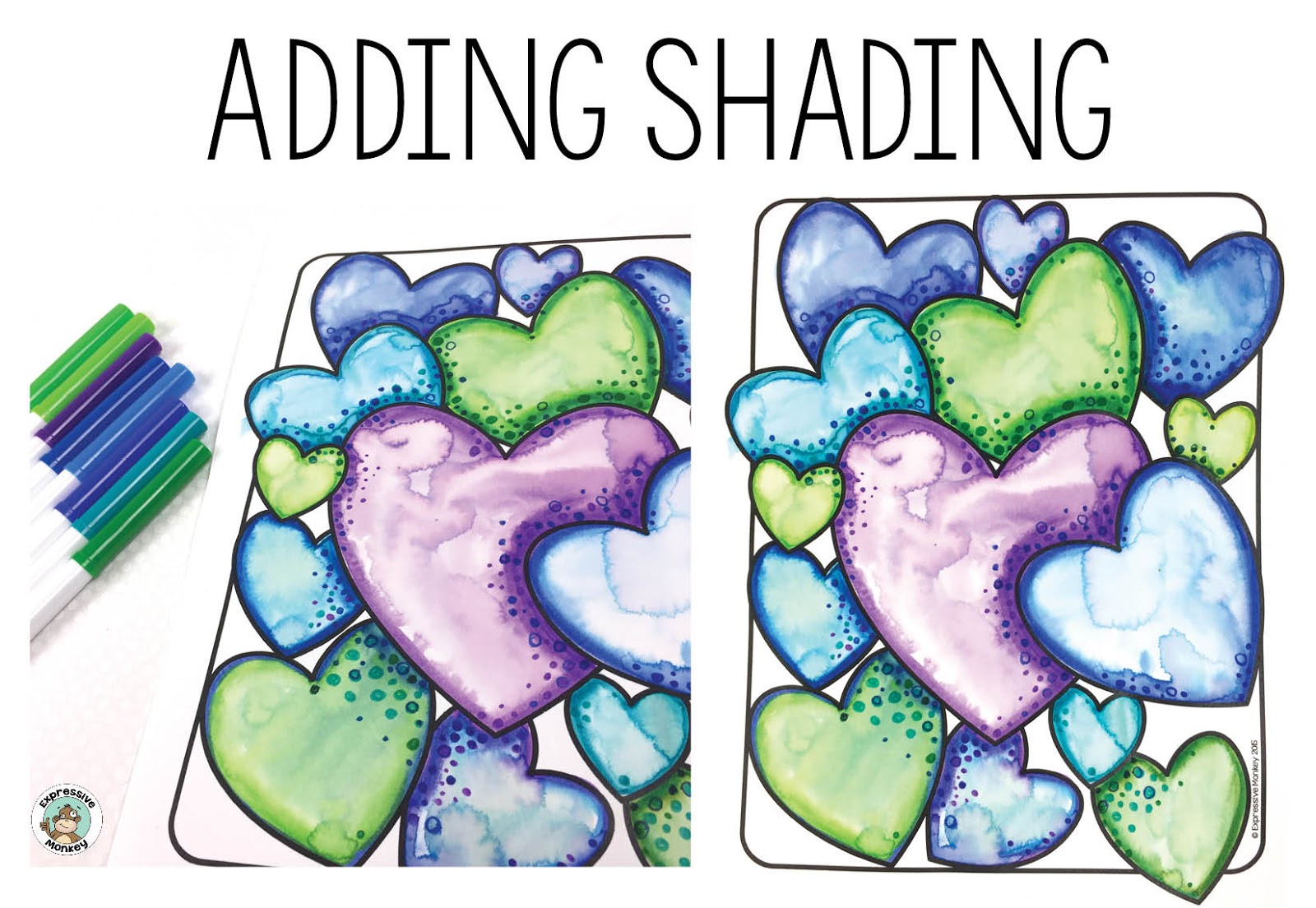
Once the paint is dry, students can add shading with markers.
● Use small dots or light strokes
● Apply color where shadows would naturally fall
● This step reinforces form and depth without overworking the page
Download the Free Coloring Pages
You can grab the FREE Heart Coloring Pages here:
● On my website: Heart Coloring Pages
● Or in my Teachers Pay Teachers Store.
These pages work beautifully on their own—or as a preview of the larger Op Art and heart-themed color lessons available in my shop.
If you’re looking for a flexible, no-stress way to teach color mixing, color families, and layering techniques, this is an easy place to start.
Social & Emotional Learning in Art

Remind yourself and others of the social and emotional benefits of art. This is a great graphic to include in parent newsletters or display in your room.
You can read more about Social Emotional Learning in Art in this blog post.
Let’s Connect!
Join my email list to hear about new resources, sales, and tips for teaching art and drawing, and get 15% off your next order!

Continue the conversation in my FB group of art teachers:


